Found First or Worth Finding? The Question Quietly Reshaping SEO and GEO
By Alexander Fakeri • July 6, 2026 • Digital Marketing

By Alexander Fakeri • July 6, 2026 • Digital Marketing
By Alexander Fakeri • July 6, 2026 • News, Digital Marketing
A post-event reflection from a business owner who just spoke at a GEO conference, where learning the latest trending strategies delivered a sober reality about what actually matters for Google rankings, AI mentions, and visibility in the age of Generative Engine Optimization.
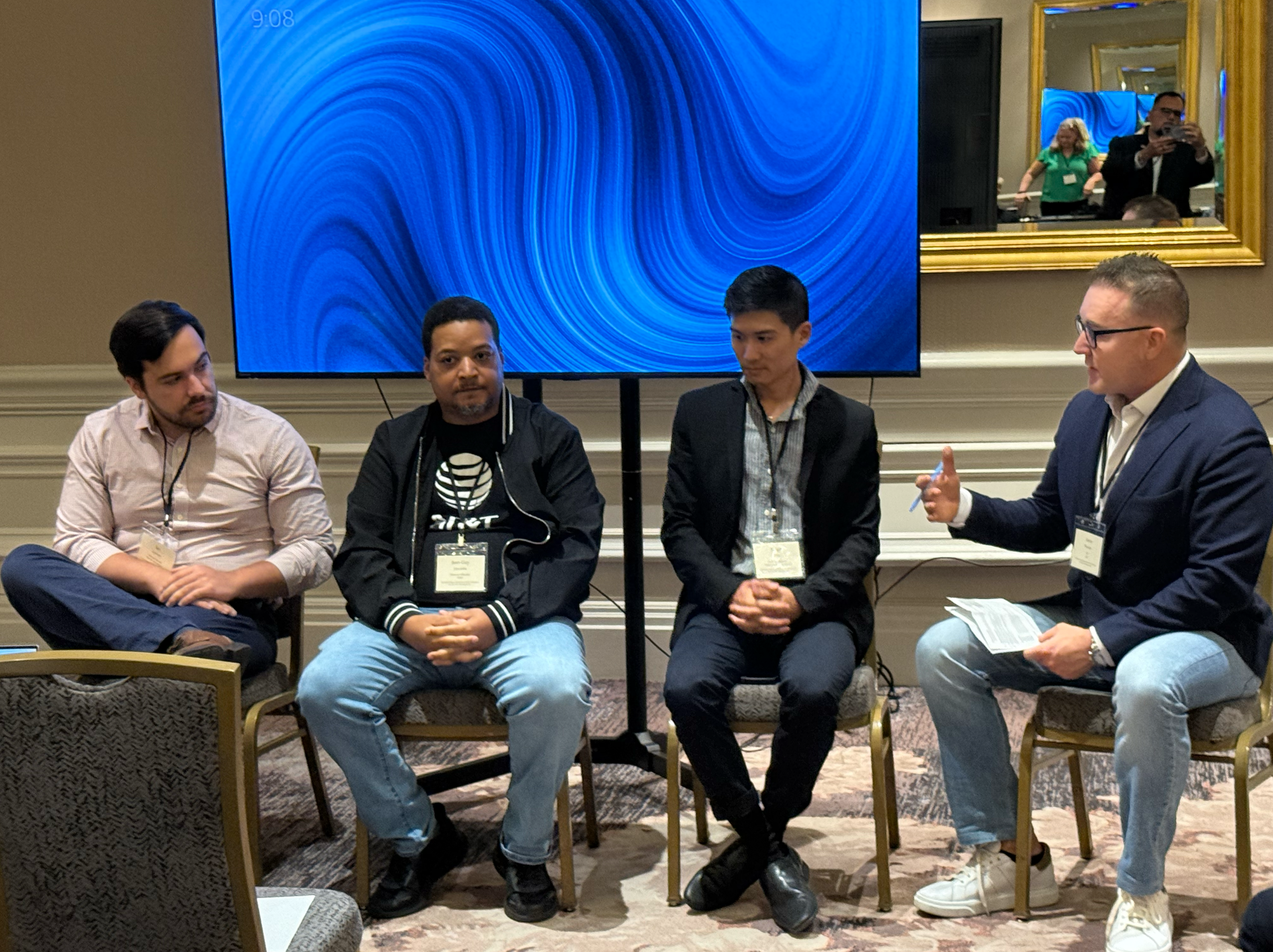
I spent two days in a Washington, DC ballroom with Fortune 500 search leads, the researchers who coined the term GEO, and a room full of people whose job titles didn't exist three years ago. The official subject was Generative Engine Optimization: getting your brand named accurately inside the answers ChatGPT, Gemini, and Claude hand to millions of people. Even as a speaker and panelist at this event, I walked in expecting to hear new tactics. I walked out more convinced than ever that most of the industry is answering the wrong question.
Here's the wrong question, the one I hear almost every week: "How many more leads will GEO get me?"
It's the same question businesses have asked about every marketing channel for twenty years, just wearing new clothes. And it has always been the wrong one. It is not logical for most businesses to play the odds for a 1% conversion on a thousand leads. The best chance of success was never about bypassing the trust-building process. It's about accelerating it.
When SEO evolved to absorb GEO, MOJO Creative Digital didn't hop on the bandwagon. We wanted to know what this technology actually means for strategy, not what it does to a dashboard. So we ran a national study: vetted thousands of users, surveyed a thousand, and built it to understand how intent, readiness to buy, and profession shape how people search and what they actually purchase.
What we found should change how every business owner thinks about being "found."
The narrative at every GEO conference is that search is collapsing and AI is eating it. The reality our data showed is far more useful, and far less convenient for anyone selling panic.
When people research how to do something or learn about a topic, 62% still start with Google. When they're ready to find a specific business to hire or buy from, 67% start with Google. AI assistants are a real and growing surface (more than half of respondents had used one in the past month), but they are not where most people begin, and they are nowhere near where most people decide.
That gap between using AI and trusting AI is the whole story.
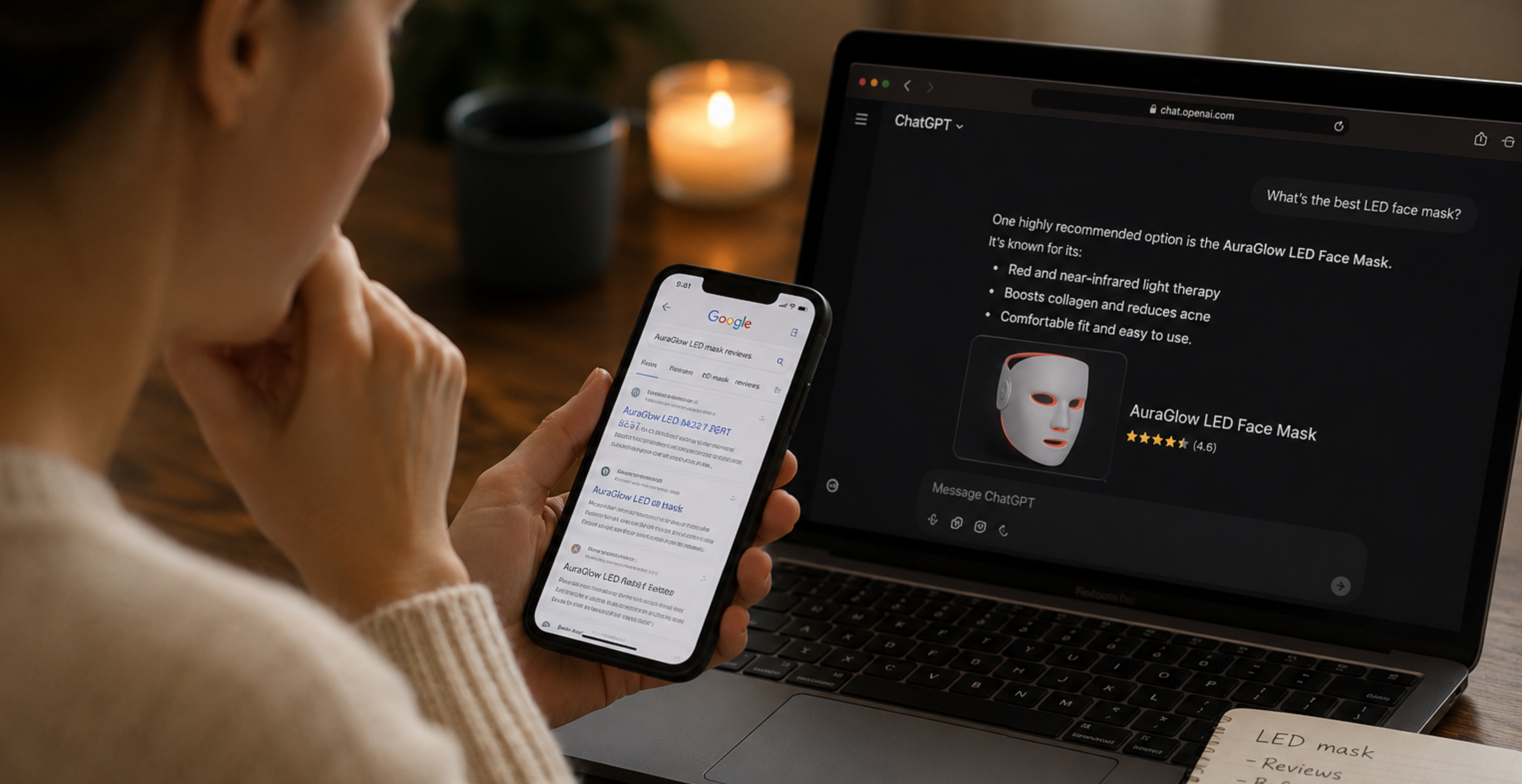
We asked a direct question. When an AI names a specific business or product, what do you do?
Only 15% trust it enough to act on it. Everyone else verifies. Nearly half said they trust it but verify it themselves. Another quarter said they note it and then rely on their own search anyway. People are checking AI against Google, Google against reviews, reviews against a friend.
People do not outsource trust to a single source. They affirm it, across everything, before they act.
And the higher the stakes or the investment, the more people look for that affirmation. For a big, expensive, or complicated purchase, people aren’t comfortable relying only on what AI tells them. A fifteen-dollar reflex buy and a forty-thousand-dollar decision are not the same act, and people don't treat them the same way. The more a decision matters, the less "showing up first" does for you, and the more affirmation the buyer demands before committing.

Thomas Smith wrote Successful Advertising. He laid out a number of moments of what a customer thinks, each as they encounter a brand advertisement again and again: customers will be indifferent the first time, recognition by the eighth, questioning the company's integrity on the 11th instance, then deciding it must be good the 16th time, counting their money on the 19th time, and finally, on the twentieth ad engagement of a brand, they buy.
If you stop and reflect, we do this with products on TikTok, display ads, commercials, and everything in between. It is about frequency, consistency, and affirmation. Thomas Smith wrote that book in 1885. People don't change.
From a century and a half ago, to today, and with the development of every technology since (print, radio, television, the web, social, and now AI), the human underneath has not changed. We buy when we trust the decision. The channels multiply. The psychology holds.
This is why I find most of the GEO conversation so hollow. The industry keeps reinventing the delivery mechanism and pretending it has reinvented the customer. It hasn't. AI is a powerful new way to reach people at the moments they're deciding whether to trust you. It is not a loophole around the trust itself.
Here is the line I left the conference stage with, and the one I'll stand behind with any client:
The game was never being found first. It's being worth finding.
You cannot sell "worth finding" as a monthly lead count, which is exactly why so few agencies try. Trust doesn't arrive in a dashboard. When an agency promises "X leads a month," they're selling a vanity metric, a graph that makes a business feel serviced while the one thing that actually drives revenue, trust, goes unbuilt.
GEO done right is not a cheaper way to skip the relationship. What it does, better than SEO ever could, is let you scale the relationship. It lets you affirm your value at the precise moments a customer is deciding whether to believe you. That's the upgrade. Not more leads. Better-timed proof.
At MOJO, we measure something different. We call it the Development Trust Cycle: shortening the time it takes a customer to trust you while raising their confidence at every step.
The deliverable isn't a prettier dashboard. It's strategy built around three things the lead-count crowd ignores entirely:
The higher the stakes, the more affirmation the buyer needs, and the less being found first actually helps. That's not a slogan. It's what 800 real respondents told us, and it's what Thomas Smith told advertisers in 1885.
If you take one thing from how our agency reads this moment, let it be this: be skeptical of anyone who answers "how does GEO help me?" with a number of leads. Found first is a vanity metric. Worth finding is a trust metric. The job, the real job, is to accelerate trust, and that's the work GEO is finally letting us scale.
The search engines changed. The answer engines arrived. The buyer didn't. Build for the buyer.
The author is the founder of MOJO Creative Digital, a digital marketing and creative agency. The national study referenced here surveyed 800 U.S. respondents (vetted from a larger panel) in June 2026 on how intent, purchase readiness, and profession shape search and buying behavior across Google, AI assistants, social and video, and review sites.